Saturday, January 11, 2014

Sanditon and The Watsons: Austen's Unfinished Novels by Jane Austen


Synopsis: Praised by critics and studied by scholars, Jane Austen's novels endure because of their popularity with readers. The author's witty and astute observations elevate her tales of parties, gossip, and romance into matters of captivating drama, offering an evocative portrait of everyday life in the towns and countryside of Regency England. Austen's premature death at the age of forty-two curtailed her legacy, and her devotees have eagerly read and re-read her handful of books. This collection features two of her unfinished novels, an often overlooked pair of gems that enrich our appreciation of Austen’s storytelling gifts.


                These writings first appeared posthumously, when Austen's nephew included the texts in an 1871 memoir of his celebrated relative. The Watsons unfolds in a familiar domestic milieu, in which a spirited heroine finds her marriage opportunities narrowed by poverty and pride. In contrast, Sanditon ventures into markedly different territory. Set at a seaside resort, among a cast of hypochondriacs and speculators, it suggests that Austen's work might have taken some unexpected new directions. Even if these incomplete stories had been of little intrinsic value, they would have been of interest as literary records and curiosities. As it happens, they are of high quality and worthy of reading for their own sake, for pleasure as well as study.

My thoughts: I liked the first unfinished novel than the last, despite the fact that it was shorter. Lady Denham and Sir Edward Denham reminded me both of Lady Catherine and Mr. Collins from Pride and Prejudice, she was extremely conceited and he was talkative and idiotic, but Charlotte was a delight to read about. Her remarkable observations of her surroundings were very amusing. Diana, Susan and Arthur Parker were a funny trio too, because they seemed to want to be the best of the best, le crème de la crème, even though their “diseases” – because I agree with Ms. Heywood that most of them were fruits of their imagination – enabled them. In Sanditon, Jane Austen explored the satyr between health and sickness, and in The Watsons she was more concerned in talking about the debut ball of the girl Emma.

                I usually don’t talk about classics because if they weren’t good they would be called classics at all, but since this book was made of two unfinished novels of the author, I’ll just talk a little bit about it (one of them I already talked in the beginning).

                The Watsons were a delight, especially the little boy Charles that danced with Emma. He was so squeezable and sweet! (laughter) This novel in particular I wished Ms. Austen had finished it so I would know if Emma would marry Tom Musgrave, Lord Osbourne or Mr. Howard or even none of them and would stay like her older sister Elizabeth. I wanted to see Margaret suffer a little bit because I didn’t like her from the beginning. But it was so short! Jane why didn’t you finish it?! Sanditon you didn’t have to because the dialogues were to extensive to me, but I loved The Watsons!

                All in all, I really liked this glimpse of Jane, my favorite author of all times!

Rate:

Throne of Glass by Sarah J. Maas


Synopsis: After serving out a year of hard labor in the salt mines of Endovier for her crimes, 18-year-old assassin Celaena Sardothien is dragged before the Crown Prince. Prince Dorian offers her her freedom on one condition: she must act as his champion in a competition to find a new royal assassin. Her opponents are men-thieves and assassins and warriors from across the empire, each sponsored by a member of the king's council. If she beats her opponents in a series of eliminations, she'll serve the kingdom for three years and then be granted her freedom. 

                Celaena finds her training sessions with the captain of the guard, Westfall, challenging and exhilirating. But she's bored stiff by court life. Things get a little more interesting when the prince starts to show interest in her... but it's the gruff Captain Westfall who seems to understand her best. 

                Then one of the other contestants turns up dead... quickly followed by another. 

                Can Celaena figure out who the killer is before she becomes a victim? As the young assassin investigates, her search leads her to discover a greater destiny than she could possibly have imagined.

My thoughts: I’m in love. Seriously. Celaena got me! She is strong, fierce, sneaky, funny, adorable, foul mouthed and beautiful! I started less than four days ago and I’ve already finished! I don’t know what to say, I really don’t! She wasn’t afraid to take things on her own hands and make them work. She is different from every female character I’ve ever read because she didn’t sit there and waited, no; she made it happen. I couldn’t stop picturing Jennifer Lawrence as Celaena. I mean, they totally match! She would be awesome if it someday became a movie. Celaena is rule less, fearless and I like it.

                This book was well written. The author kept it simple but it was never tedious. Every chapter something happened, adding new details to this enticing story. Some parts were predictable to me, but it was delightful to see that I was right (I love when I get the things right! *laughs*). When I came to the end, I didn’t want to believe it. I wanted to tear it apart until I found some missing part that had the rest of the story. *laughs*

              The boys were amazing, but I have to say that I’m team Chaol (* ¬ *). Dorian was the hunk: the guys that get all girls, that is handsome, – his features are my favourite: blue eyes and black hair – rich, gentleman. But he is a kid: he’s nineteen, immature (for me), scared of his Father – the King of Adarlan. Chaol is different: despite the toughness, he is softhearted, funny, friendly. He stayed beside Celaena during all her preparation for the battle, and what did Dorian do?? Just came to her chambers once in a while and hooked up with her. Chaol, if Celaena doesn’t pick you, you can stay with me, no prob! *laughs*

                At first I thought that those things with ghosts of an elf queen were a bit silly but I gave a vote of faith for the book and wasn’t disappointed: Ms. Sarah did a great job with the whole plot, joining Viking mothology (Wyrd is one of the goddess of time, representing the past) and magic, elfs etcetera. The way the King conquered Erilea kind of reminded me of The Middle Ages (in the beginning if I’m not mistaken), when the Catholic Church destroyed many “pagans” and their beliefs to affirm their power. He had no respect for the others, stomping at everything as if they were cockroaches.

                The characters that I despised were him (the King), Cain and Kaltain. They were greedy, mischievous, liars and cruel criatures. I was glad with Cain’s fate (that I won’t say), but I’m afraid that the King might have something dark on his sleeve, but now I have to wait until the sequence arrives here where I am!


Rate:

Sunday, January 5, 2014

All Smiles by Stella Cameron


Synopsis: What Meg Smiles lacks in wealth she more than makes up for in audacity and determination, both quickly harnessed when Jean-Marc, Count Etranger, and his sister take up residence next door. Now gainfully employed as companion to the count's madcap sister, Meg discovers it is not her charge who occupies her thoughts, but the older brother. When Meg becomes the victim of a series of strange accidents, Jean-Marc vows to ensure her safety, even if it means keeping her close to him day and night.

My thoughts: What made me get through this book was that I liked Meg and Jean-Marc, but that is all. The edition that I got had maaany mistakes in vocabulary, grammar and so on, making it sometimes difficult to understand.

                What was all that shit with that Spivey ghost?! I thought it was ridiculous and it got worse at the ending when the author herself wrote to the reader saying “please don’t get offended by him and blah blah…” WHAT?! The ghost itself was unnecessary and her little note was even more unnecessary! So did that thing that Meg did to get out of irritating situations, she get into a trance or something. Girl, instead of getting into nirvana, why don’t you face all your crap and try to solve it?? Please!

                I liked Desireé as well. She had guts enough to do whatever she wanted to and she ended up as the new regent of her kingdom – since she is a princess – and she is a joy because she is funny and smart. Sybil – Meg’s sister – is nice too, and it really cheered me that in the end she showed her strength and faced her cousin, that she showed that she wasn’t that submissive as everyone else thought – and that includes me, I have to confess. Jean-Marc was cool too. He is a sexy character, as all those characters from novels that you buy at the grocery store at your way home.

                Another thing that got into my nerves were the macho characters such as the ghost and William – Meg’s cousin – because they had extremely stupid thoughts – that women should stay at home, and be prude… We should do what we wanted without judgment from guys like these! Even though the story happens during the XVII century, their talk stroked me hard because nowadays there are still guys like this!

                All in all, I was kind of disappointed with this one… I was so happy that I was getting the hand in choosing books! L

Rate:

Thursday, December 19, 2013

The Mechanical Circus Tresaulti by Genevieve Valentine


Synopsis: Outside any city still standing, the Mechanical Circus Tresaulti sets up its tents. Crowds pack the benches to gawk at the brass-and-copper troupe and their impossible feats: Ayar the Strong Man, the acrobatic Grimaldi Brothers, fearless Elena and her aerialists who perform on living trapezes. War is everywhere, but while the Circus is performing, the world is magic.

That magic is no accident: Boss builds her circus from the bones out, molding a mechanical company that will survive the unforgiving landscape.

But even a careful ringmaster can make mistakes.

Two of Tresaulti's performers are entangled in a secret standoff that threatens to tear the circus apart just as the war lands on their doorstep. Now the Circus must fight a war on two fronts: one from the outside, and a more dangerous one from within.

My thoughts: this book was really thrilling! It’s about a magical circus in a post apocalyptic world, where cities have collapsed with bombs and there is no such thing as a stable government. The Mechanical Circus Tresaulti is a out of common place where people have metal parts – arms, legs, eyes, bones, spine you name it – and where nothing is what it seems (li-te-ral-ly). When you think you have found the order and meaning of all of it, the book fools you and you get lost all over again! I called it an organized mess: you can find what you want if you know where and what to look for. Therefore it requires your full attention at every page you turn otherwise you’ll have to keep searching through the book for the answers while you continue reading.

                It has a very good writing with different tenses making you see the same scene with different angles and perspectives. So, this is a kind of book that you have to go “all the way through” or suffer with the doubt of what was about to happen.

                The characters were captivating and well-structured. My favorites were the ladies, especially Elena, Boss and Bird, because they were shown as strong, independent and active, making decisions of their own instead of just agreeing politely to them.

                The end of it was a little incomprehensible, so I had to reflect a little bit about it in order to fully understand it (although I still haven’t got it completely) (laughs). I think that if it followed a straight timeline it would be so much easier for the reader, but I believe that the mess is all part of the show.

All in all, I really liked this book! It was very different from everything that I’ve ever read and I would love to see a circus such as this one.

Rate:
and a half

Wednesday, December 4, 2013

Princess: A True Story of Life Behind the Veil in Saudi Arabia by Jean P. Sasson


Synopsis: Sultana is a Saudi Arabian princess, a woman born to fabulous, uncountable wealth. She has four mansions on three continents, her own private jet, glittering jewels, designer dresses galore. But in reality she lives in a gilded cage. She has no freedom, no control over her own life, no value but as a bearer of sons. Hidden behind her black floor-length veil, she is a prisoner, jailed by her father, her husband, her sons, and her country.

Sultana is a member of the Saudi royal family, closely related to the king. For the sake of her daughters, she has decided to take the risk of speaking out about the life of women in her country, regardless of their rank. She must hide her identity for fear that the religious leaders in her country would call for her death to punish her honesty. Only a woman in her position could possibly hope to escape from being revealed and punished, despite her cloak and anonymity.

Sultana tells of her own life, from her turbulent childhood to her arranged marriage--a happy one until her husband decided to displace her by taking a second wife--and of the lives of her sisters, her friends and her servants. Although they share affection, confidences and an easy camaraderie within the confines of the women's quarters, they also share a history of appealing oppressions, everyday occurrences that in any other culture would be seen as shocking human rights violations; thirteen-year-old girls forced to marry men five times their age, young women killed by drowning, stoning, or isolation in the "women's room," a padded, windowless cell where women are confined with neither light nor conversation until death claims them. By speaking out, Sultana risks bringing the wrath of the Saudi establishment upon her head and the heads of her children. But by telling her story to Jean Sasson, Sultana has allowed us to see beyond the veils of this secret society, to the heart of a nation where sex, money, and power reign supreme.

My thoughts: an amazing story about a princess who chose to speak her mind in a world where she was taught to silence herself. What makes it more thrilling is the fact that it’s real, that Sultana really existed, despite the fact that her real name isn’t that.

                While reading, I had hopes for Karim. I thought that he would stood up for the princess in her fight for women’s rights, but apparently he just said what he thought would soothe her wild character down. And, my Goddess, how they spend money! I never thought that they were so shopaholics or THAT wealthy (although that in Dubai they are like, craazily rich).

                Despite the few lines between the characters, it doesn’t make the reading less entertaining and fun. I laughed and cried (this last one internally) with this feminist princess that had the guts to get out of her palace and tell the world what women in Saudi Arabia get through.

                Ali got in my nerves as well as his Father. I almost, ALMOST, had a glimpse of hope with the last one, but after it he sank in the abyss of my profound loath for him. Her brother was disgusting: seriously, pictures of women and animals not doing cute or nice things, but dirty and nasty?! Jesus!

                In a society such as ours where we can do things that they can’t even fathom, we don’t give enough value to these little things. This book made me see that what for a few is a lot, for many is ridiculously small.

Rate:

Monday, December 2, 2013

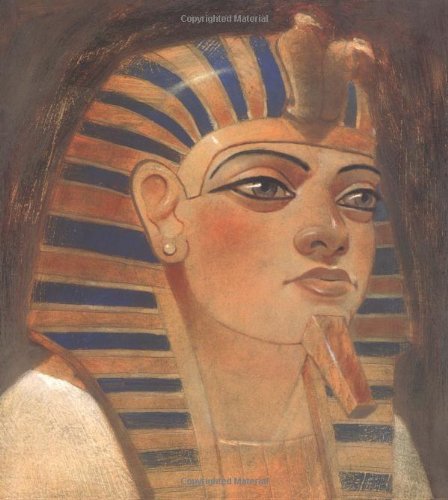
Hatsheptut: She Pharaoh

Name of Birth:                                   Hatshepsut

Place of Birth:                                    Thebes, Egypt

Date of Birth:                                     c. 1508 BCE

Place of Death:                                  Egypt

Date of Death:                                   c. 1458 BCE

The only child born to the Egyptian king Thutmose I by his principal wife and queen, Ahmose, Hatshepsut was expected to be queen. After the death of her father at age 12, Hatsheput married her half-brother Thutmose II, whose mother was a lesser wife -- a common practice meant to ensure the purity of the royal bloodline. During the reign of Thutmose II, Hatshepsut assumed the traditional role of queen and principal wife.
Hatshpsut was the first female pharaoh in history and she made it through many obstacles. She governed the Egypt for 22 years on her own. At that time, Egypt was one of the richest. To remain in the government she made use of her relations with her Father, that at first agreed with it, since her son Thutmose
III (son of Thutmose II) was too Young and couldn’t reign yet. Initially, Hatshepsut bore this role traditionally until, for reasons that are unclear, she claimed the role of pharaoh. Technically, Hatshepsut did not ‘usurp’ the crown, as Thutmose the III was never deposed and was considered co-ruler throughout her life, but it is clear that Hatshepsut was the principal ruler in power.

She started to wear the false beard and trousers just like the pharaohs as a way to confirm her authority as regent, not to trick people by thinking she was a male. Hatshepsut’s successful transition from queen to pharaoh was, in part, due to her ability to recruit influential supporters, and many of the men she chose had been favored officials of her father, Thutmose I. One of her most important advisors was Senenmut. He had been among the queen’s servants and rose with her in power, and some speculate he was her lover as well.
During her reign, Egypt prospered. She promoted an administrative innovation and commercial expansion. Unlike other rulers in her dynasty, she was more interested in ensuring economic prosperity and building and restoring monuments throughout Egypt and Nubia than in conquering new lands. She built the temple Djeser-djeseru ("holiest of holy places"), which was dedicated to Amon and served as her funerary cult, and erected a pair of red granite obelisks at the Temple of Amon at Karnak, one of which still stands today. Hatshepsut also had one notable trading expedition to the land of Punt in the ninth year of her reign. The ships returned with gold, ivory and myrrh trees, and the scene was immortalized on the walls of the temple.
            At the same time that she made changes in Egypty, she took care of Thutmose III’s education. She sent the boy to tha Amon’s temple where he was educated to become the next regent.
            To ensure her authority she didn’t spend efforts to keep the boy away from the throne. She did even tried to marry him with one of her daughters from her marriage with Thutmose II. However, with princess’s death, her power was weakened. As head of the Army, Thutmose III claimed his rights, specially his title as pharaoh. But he only received that after the queen’s death, in early February of 1458 B.C. of unknown causes. Her remains were never found until recently in 2007. Late in his reign, Thutmose III began a campaign to eradicate Hatshepsut’s memory: He destroyed or defaced her monuments, erased many of her inscriptions and constructed a wall around her obelisks. While some believe this was the result of a long-held grudge, it was more likely a strictly political effort to emphasize his line of succession and ensure that no one challenged his son Amunhotep II for the throne

Sunday, November 10, 2013

The Courtesan and The Samurai by Lesley Downer


Synopsis: Japan, 1868: the last shogun has been defeated, the age of the emperors is about to begin - and in Japan's frozen north a diehard band of loyalists plans a desperate last stand. Hana is just seventeen when her husband goes to war, leaving her alone and very vulnerable. When enemy soldiers attack her house she flees for her life across the shattered city of Tokyo and takes refuge in the Yoshiwara, its famous pleasure quarter. There she is sold into a brothel and forced to train as a courtesan. Yozo, a traveller, adventurer and brilliant swordsman, returns to Japan after six years in the Victorian West to discover that the world he left behind him has been destroyed. Travelling north to join his rebel comrades, he is captured during their final battle. Escaping, he makes his way south to the only place where a man is beyond the reach of the law - the Yoshiwara. There in the Nightless City where three thousand courtesans mingle with geishas and jesters, the battered fugitive meets the beautiful courtesan. But each has a secret so terrible that once revealed it will threaten not only their union - but their very lives...

My thoughts: Very well written and well documented with a natural connection between history and fiction. What lacked for me, however, was the absence of dynamism, maybe because of the presence of a lot of narration and less of dialogue and interaction between characters.

                If you are a fan of anime and watched Hakuoki Shinsengumi, you’ll be able to identify immediately the link, since both anime and book talk about the same time lapse in Japan’s History. You’ll see that Commandant Yamaguchi is actually Hijikata-san, the most capable swordfighter from the militia.

                Something that really got my eyes is the capacity of the author to tell a good story with sufficient details to make the scenes alive in my head. Furthermore, her love and passion for the Japanese culture makes this novel very recommended for  those who love it as well.

                Despite the compliments above, the lack of dynamism really caught me. Honestly, what made me continue this book through until the end was my wish to see the main characters encounter and because of my own fanaticism and love for this culture. This novel was more like a historical account than a novel in itself because of the few dialogues in the beginning of the book and until at least its half.

Rate: